Red Face Day And Joke Writing

Happy Red Face Day! It’s a day I set aside to celebrate being exactly one month early for Red Nose Day. I hope more of you will join me next year.

I look forward to all the comedy on telly later (in a month’s time), but until then, here’s a tip for the jokers out there…

I came across a book once that had one piece of advice that stuck. It’s this acronym:

THREES*

If a joke isn’t working or could be better, does it have these elements?

TARGET. All jokes need a target. Could be person, or an idea, or anything.

HOSTILITY. Is it a target people can get behind, and build up hostility toward?

REALITY. Is the joke based in reality? Of course you can still be surreal…

EXAGGERATION. Exaggerate/heighten (even go surreal) the reality in your joke as much as you can without breaking it, so you can heighten the…

EMOTION. If the target is something or someone the audience can build up hostility toward, go for it! Make your Greedy Banker a maniacally laughing, top hat-wearing baby-eater…

SURPRISE. If they can see the punchline coming, it just won’t work.

Bear in mind, as I said earlier, there is only one piece of advice worth anything in this game, so feel free to disregard/improve the above.

Also, this is not a formula for synthesising jokes from the ground up, it’s just an idea to throw at stuff you’ve already created to see if you can improve it.

Form is there to guide, formula is just too proscriptive and probably unhelpful wherever it rears its ugly head.

And finally, they say the secret to comedy is timing. A month early is probably not right.

*(I want to credit Mervyn Helzer for this, but can’t find him anywhere on the internet.)

Standard

The Best And Rudest Advice Ever

Sometimes when you’re at work, there’s a tension between what you want and what others want.

For instance, I do musical comedy.

Early on, (not so much now), I’d get advised to stop with the guitar and the singing. Some folks don’t like it. In fact, I’ve found everybody hates musical comedy. Except audiences.

I’ll push on with it. I like it. Also, I’m hiding.

I’ll hide if I want. Who cares who any of us really are? Hey, Einstein! Stop hiding behind all that maths and stuff. Tell us about the real you.

This is why I love watching performers like Terry Alderton, Harry Hill, Tommy Cooper, John Hegley… (you finish the list).

“Hey Harry, hey Terry, hey Tommy, hey John – why not consider dropping all that “persona” stuff? The mad skills, the magic tricks, the dazzling and unique poetry… You’re actually quite funny without it.” Sound reasonable?

Like I’ve said before, listen to all the generous advice, but for God’s sake, try not to act on all of it. Take some chances. We don’t need another conformist. Every hit is a surprise hit.

There’s something to be said for being strong where you’re strong, as opposed to where others wish you were strong.

My favourite line about this comes from a performer and promoter who is way successful in both roles. I won’t say who, in case he/she’d prefer not to associate themselves with it.

It’s the best and rudest bit of advice you’ll ever hear. I’ve censored it for a family audience.

“You’ve got to ****1 with the ****2 you’ve got.”

Poetry.

(Key

1= make love

2= sexual organ)

Standard

Scared And Loving It! (Non-)Combating Stage Fright

I used to get stage fright before some gigs. Then I stopped drinking. Now I get stage fright before all gigs. And love it.

I used to look at the more experienced people I was working with while I was feeling stage fright and presume they weren’t feeling it. They were professional. I was unprofessional.

It took me years to work out that for me, feeling (almost unbearably) nervous is what it feels like to be inside my body while I’m caring intensely about what’s about to happen. It’s actually professional.

I know it sounds like mumbo-jumbo, but now I treat that feeling like friend. Alright, a business acquaintance. Giving me a pep-talk. It hasn’t gone away, but I’ve come to associate it with good things.

I think what happens is this. Early on (whether it’s stand-up, job interviews, public speaking, life in general…) you get nervous, you have a hard, learning experience (not because of the nerves, because you’re new!) and as this repeats over time, you come to associate that edgy feeling with bad experiences.

Unfortunately, if you’re growing, learning experiences never go away. I find any time I think I’ve got it nailed, that’s when I’m about to have a learning experience. It hurts in the moment, but I’m all the better for them. Maybe the trick is to associate the feeling with learning and not failure. Fake it till you make it. I won’t tell.

Some people actually use these dreaded feelings as a compass to direct them to their next project. If everyone else is afraid of doing something, but you can be with the fear (not make it go away) and do it, that’s valuable.

So let’s man and woman up, and get scared. That feeling is exactly what you should be feeling, because you’re doing something that matters.

Standard

Audience = Gift, Deadline = Gift – A Cure For Writer’s Block!

People think comedians are crazy, but I feel sorry for people doing projects that don’t involve an audience.

If I have a stand-up idea like, now-ish, I can put it on its wobbly feet in front of some people like, tonight-ish.

The way tonight goes will change the shape of the idea for the next time I try it out. This process can repeat until we’re all happy with it. Having an audience is the gift that gives me an opportunity to take a chance…

Well, thanks for the gift, audience, but why do I want to get out of my comfort zone when you’re around?

Just a thought, but I reckon the gift of an audience won’t come to much without the gift of a deadline.

That’s the gift you have to organise.

Unlike a novelist who has to be really disciplined (or has the gift of a caring publisher breathing down their neck for a manuscript), stand-ups can commit to (say) an Edinburgh Festival run. That’s committing to a new hour of material or August is going to suck. Now those try-out nights really need to count.

The best deadlines I ever had were recording dates for radio shows (lucky me), or podcasts (don’t have to be lucky to do those). That mike is going to go live at that particular time, better have something to say into it…

Yes, going to Edinburgh in August is expensive (except when it’s not – be part of the Free Fringe!), but podcasting (for example) isn’t. The Camden Fringe or The Leicester Comedy Festival are also ace and may be nearer and less expensive for you. The Sheffield Comedy Festival is ace squared.

Yes, there’s a cost in time and effort; but whoever you are, what’s the long-term cost of not creating?

PS. Maybe the idea for non-performers is to find a way to involve an audience in your project, whatever that might look like.

How about this for novelists with writer’s block:

I had an idea to start a web company along these lines: You promise to help an author produce a manuscript by date (x). You get the author to give you, say, £1000 (more if you think they’ve got it). Both parties sign a legally-binding contract that you get to keep the money if you don’t get a manuscript of (n) pages on date (x).

I think this will result in a delivered manuscript 100% of the time. The reason that it needs to be a business is that it won’t work if you’re friends with the author. It has to be like “Strangers On A Train”. Maybe authors who don’t know each other could do this for each other via the web – each egging the other on to not complete!

Sounds sadistic, I bet someone’s already thought of it!

Standard

Making Money And Stand-Up

So let’s talk about making money with our creativity.

I have a pet theory that whatever you were doing before you moved into stand-up, that’s how you’re going to do stand-up.

I was singing songs in pubs and clubs, so I approached stand-up like that. Write a bunch of songs (jokes), put them in a running order (set list). Drop the ones that don’t make people dance (laugh). Making money? I’m just happy to not have to pay to play.

Maybe because Jimmy Carr was doing marketing for a blue-chip company, he went straight in at the exec level, figuring out the power structure, befriending gatekeepers and getting ahead.

Before I was singing songs for a bit of money, I had a job. A job is where you have a boss, and if you make them happy you might get a better job, maybe better money.

When we got into stand-up, a lot of us had jobs. Then, when we started getting paid for stand up, we transplanted our job thinking into our stand-up thinking. There’s a boss (a promoter), if you make them happy (by making the audience happy), you get promoted (better gigs – nicer, or more lucrative).

This definitely works and makes sense. We would be nowhere without the circuit and the people who work their tails off trying to put audiences in front of our non-famous asses.

But how do performers like Daniel Kitson and Stewart Lee and Simon Munnery and Richard Herring and… (you finish the list) get to do the art they do? I can’t speak for them, but it seems to me that they didn’t turn it into a job.

It might be design, it might be default, but instead of (or as well as) building a list of bosses and thinking up strategies to please them, they built an audience. Sometimes one person at a time at fringe festivals, sometimes with the help of an accelerant, like TV.

There are two(ish) big companies who own all the famous people, and this duopoly works tirelessly to get their famous people on the TV shows that they make. Let’s not sit around waiting to get picked.

The internet’s a connection machine. “Publish” is a button on a website. You have your own TV channel. You have your own radio station. Go to it!

Standard

The Only Advice Worth Anything

If you’re starting out in comedy, or having a crisis of confidence, there’s a lot of advice out there. The only 100% objectively useful piece of advice is this:

DON’T QUIT.

I’ll just flesh this out a bit.

If you’ve been doing the same thing on stage for five years and it’s the first five minutes you wrote and it’s not connecting with people, you should probably vary what you do. I don’t think anybody persisted their way to success by sticking with the first five minutes they ever wrote.

But! If you vary what you do too much, you won’t get a handle on what works and doesn’t work (for you). Remember, other variables are changing from gig to gig (the audience, their level of sobriety, the type of performance space, the community the event is in, the lighting, the height of the ceiling, your position in the running order, the tone set by the MC and the preceding acts…). It will be your journey to develop intuition about what the feedback from each gig means given these variables, and the ones you’re adding in by changing your act.

Also, I’d set a time-limited goal if I were you. Mine was, “If I’m not making a living at this after five years, I’ll try something else”. Five years was just a guess, based on more traditional models of personal development (three years of college, two years of practice).

The UK circuit has changed since I began, but it seemed to me that people who were making a living were able to perform a rock-solid twenty-minute set in a variety of settings. Having this time-constrained goal helped me get focussed, but I must stress that the world has changed; the goal I set myself might not be the right way to go about thinking about your work anymore.

Your goal might not have anything to do with money (in fact, there’s a solid case for keeping money out of it), but it probably should involve a thing changing by a certain date, and real consequences if it doesn’t happen. My first target was set when Jeff Green said to me, “Stop trying material out on me! Just book a gig and tell some people that it’s booked, so you’ll look like an idiot if you back out – then you’ll have to come up with the material.” He said this was the same advice that started his career.

Finally, every piece of advice anyone gives (including mine) can be disregarded. Listen to it all, but if you try to take it all on board (“topic (x) is hack”, “you should wear a suit”,”you should talk more about your passion for rollerskating, nobody’s doing that…”) you will do nothing.

The only piece of advice that you must take on board is the one I wrote at the top in capital letters.

Good luck!

Standard

Freedom Cancer!

Yesterday was a good day for net neutrality.

Some of you may be scratching your head. What’s net neutrality?

Forgive my simple and probably fuddled thinking, but this is the way I understand it. The internet was developed at the Pentagon, at expense of the American taxpayer (thanks, guys!) and now, if we want to make an incremental change to the internet, we can make millions – as we’re all sure to do, as we all invent the next Google or Facebook.

But! Legally enforced net neutrality says I can’t just invent a virtual tollbooth that slows down some data transmission and speeds up other data transmission, depending on whose ideas I like, or who has bribed me the most.

Gah! Another business idea bites the dust!

“Net neutrality” probably came out of the same think-tank as “global warming”. Global warming actually sounds nice.

If only the minds that brought us “death taxes”, “bed-blocking”, “job-killing” and “death panels” were in charge of framing the net neutrality debate, we’d all be talking about Freedom Cancer.

If you happen to be one of the three people who haven’t seen John Oliver talking about net neutrality, you probably need to!

Standard

Question Time. Football, But For Ideas?

UKIP deputy chairman Suzanne Evans was scheduled to appear on BBC’s Question Time tonight, but she’s been substituted. Never mind! George Galloway will still be appearing tonight. Galloway has a certain position on Israeli expansionism. The show is live from Finchley. Lots of Jewish people live there. Sparks will surely fly.

I know how I feel about a whole host of issues, including Israel/Palestine (here’s a song about that from me) and I’m sure you know how you feel, too. Your values were baked into your cake a while ago.

If you’re a Tottenham Hotspurs fan and you watch them play Arsenal, and Arsenal win, you don’t switch from being a Spurs fan to an Arsenal fan because they played better. (Sorry, I don’t know how likely this is, I don’t follow football).

On Question Time, If a UKIP representative (somehow) makes a case for the repatriation of foreigners, or someone makes a compelling argument for the two-state solution, we’re all going to feel exactly how we already felt about these issues. I think we’re watching because we’re cheering on our idea. If our team loses, there’s always next week.

It’s nice when other people feel the way you feel, but to get the same effect, you could turn the sound off and listen to your favourite Rage Against The Machine or Skrewdriver album – whichever suits your politics.

I know what I’ve been doing so far (saying what I think) is biased reporting. Unbiased reporting is when you wait for someone else to say what you think and then report that they said it.

I knew someone who attended a Question Time taping once. They told me on that occasion, the panel actually got some tough questioning from the audience in the early minutes of the show. And then one of the production staff said, “Thank you, that’s the technical run-through out of the way, now we’re going to start taping…”

Nice editing tactic!

Standard

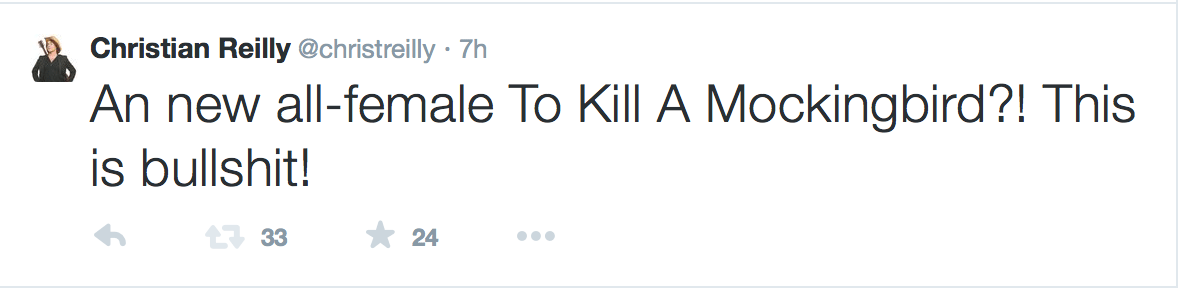
To Kill A Mockingbird, Twitter, Mumford And Sons

I was quite pleased with this tweet, even though it has a typo.

When it comes to creativity, I say better to make an imperfect thing than nothing at all. I’ve noticed that if you mess up a setntence, it probably commands more attention than if it was corrct!

Good old Twitter!

Joel Bakan wrote a (great) 240-page book (The Corporation) which played out this idea: If a corporation was a person (like many think), what type of person would it be? The book concluded that it wouldn’t be a very nice person, since it was, by law, incentivised to seek profit and turn the anti-social consequences of its actions into externalities. Even if a corporation were owned, directed and staffed entirely by cloned Dalai Lamas, it would still have to act this way.

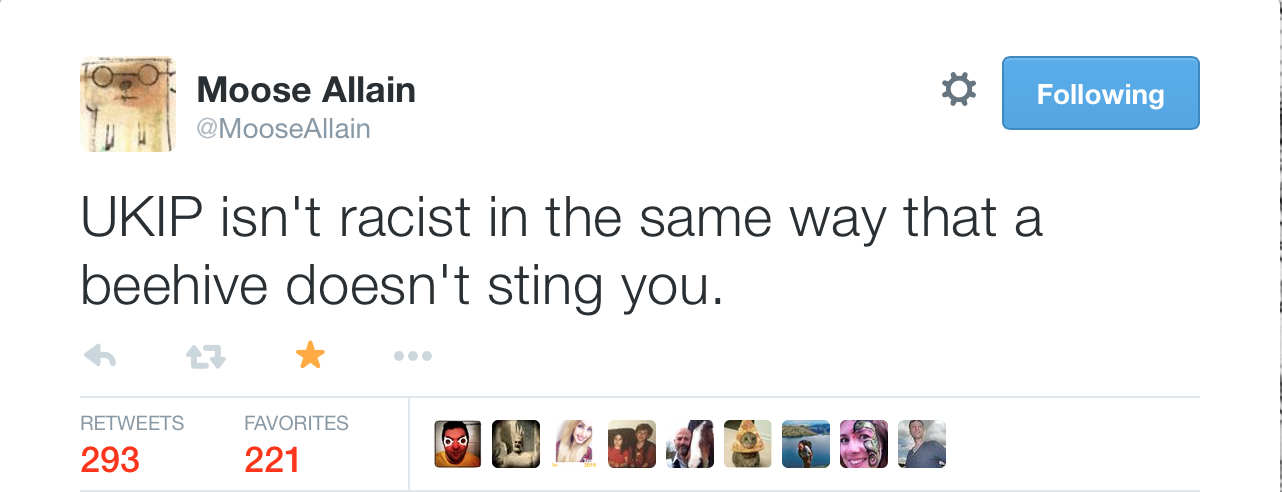
@mooseallain summed up the difference between people and institutions in 13 words:

Screen Shot 2015-02-04 at 16.21.13

Obviously, I’m not saying one’s better than the other, just different ways to skin a cat!

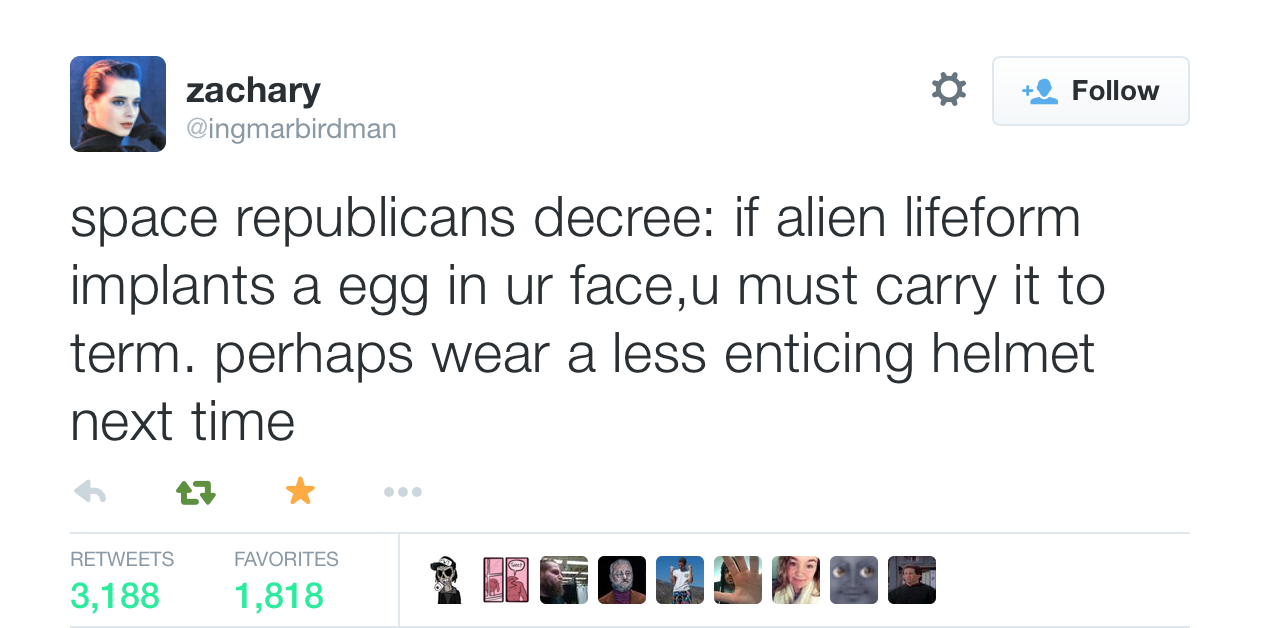
Also, on a different topic, I really like this one by @ingmarbirdman – thought I’d throw it in…

Screen Shot 2015-02-04 at 16.22.11

In other news, I was really pleased with how this Mumford & Sons parody was received. Thanks to anyone who watched, shared, or enjoyed it! Just trying to save you time and money as ever…

Standard

“Money Is Created Out Of Thin Air!” – Red Hot Chili Peppernomics

Here’s me doing every single Red Hot Chili Peppers song in 30 seconds.

Now we need to get into economics. I’ll come back to the Red Hot Chili Peppers in a sec.

What if I told you money was created out of thin air?

In March last year, The Bank Of England fessed up that this was happening.

Which means that a country like the UK (or the US), with a non-convertible*, sovereign currency** can spend whatever it wants and never run out of money. Which throws the case for austerity out of the window. I’m serious. The Bank Of England is serious. Read up on it.

Back in the day, people used to say, “I don’t need to read, there’s only one book and the guy in church tells me what it says.” Easy to control people back then.

Well, now the new “I don’t need to read” is “I don’t need to understand economics.”

If you can learn to drive a car (which takes intense concentration and where one slip-up can have fatal consequences) after, say, 20 hours instruction – you can nail this. At least to the point where you can argue with this post. Most people learn to drive.

I wanted to do my part in changing the conversation, but unfortunately I found myself being a musical comedian rather than a college professor, or an FT journalist, so I thought I’d try and make musical comedy out of the issue. I thought it’d be funny to have the Red Hot Chili Peppers (who only have two things on their minds) tackle the subject. The song’s called “Spend Your Wad”.

I put the song into an Edinburgh Fringe show. So far the conversation on austerity hasn’t changed. I don’t know, maybe I’m doing something wrong. I’m not going to blame myself, though. When an institution like the Bank Of England says explicitly that money is created out of thin air and the news ends up on the back pages to make room for celebrity gossip… Well, it’s almost like the media has a vested interest in cultivating a bovine audience.

The world is full of clever people. The world is screwed. Something tells me the clever people are not pulling their weight. The rest of us need to clever up.

This three-minute video of Warren Mosler describing how to turn litter into money is a great place to start.

*Non-convertible currency means you can’t exchange it for gold. It’s not a promise to pay the bearer anything on demand, like in the old days.

**A sovereign currency means we create it, unlike say Greece. The Euro is a stateless currency, so the Eurozone member states have to ask the European Central Bank for Euros when they need some. Which is why the PIGS (Portugal, Ireland, Greece, Spain) have had so much economic pain.

Standard